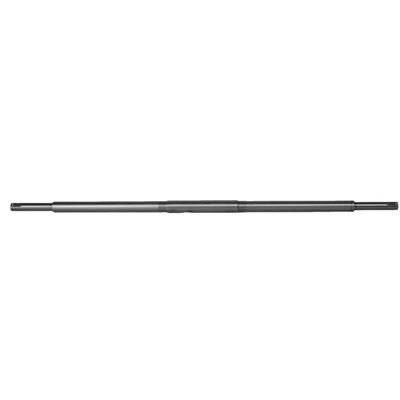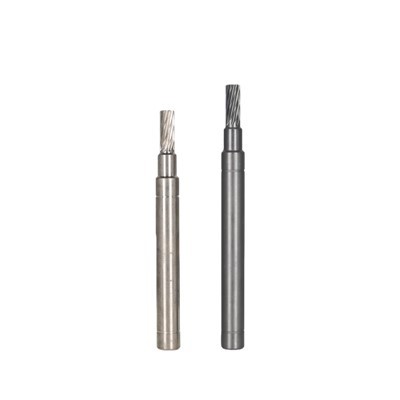


As a motor shaft supplier, I often receive inquiries from customers about the suitability of motor shafts for high - temperature environments. This is a crucial question, as many industrial applications, such as in steel mills, glass manufacturing, and power generation, involve high - temperature conditions. In this blog, I will delve into the factors that determine whether a motor shaft can be used in high - temperature environments and provide some insights based on our experience in the industry.
Understanding the Impact of High Temperatures on Motor Shafts
High temperatures can have several adverse effects on motor shafts. Firstly, thermal expansion is a significant concern. When a motor shaft is exposed to high temperatures, it expands. If the expansion is not properly accounted for, it can lead to misalignment within the motor assembly. Misalignment can cause increased vibration, premature wear of bearings, and ultimately, motor failure.
Secondly, high temperatures can reduce the mechanical properties of the shaft material. Most metals used in motor shafts, such as steel, experience a decrease in strength and hardness as the temperature rises. This can make the shaft more susceptible to deformation and fatigue under load. For example, at elevated temperatures, the yield strength of steel can drop significantly, which means the shaft may not be able to withstand the same amount of stress as it could at room temperature.
Another issue is the potential for oxidation and corrosion. In high - temperature environments, the shaft is more likely to react with oxygen in the air, forming oxides on the surface. These oxides can flake off, leading to surface roughness and further degradation of the shaft's performance.
Factors Affecting the Suitability of Motor Shafts for High - Temperature Environments
Material Selection
The choice of material is perhaps the most critical factor in determining whether a motor shaft can be used in a high - temperature environment. Some materials are better suited to high - temperature applications than others. For instance, stainless steel is a popular choice due to its good corrosion resistance and relatively high strength at elevated temperatures. Alloy steels, which contain elements such as chromium, nickel, and molybdenum, can also offer improved high - temperature performance.
In addition to traditional metals, advanced materials like ceramics and composites are being explored for high - temperature motor shaft applications. Ceramics have excellent heat resistance and low thermal expansion, but they are often brittle and more difficult to machine. Composites can be tailored to have specific properties, such as high strength - to - weight ratios and good thermal stability.
Design Considerations
The design of the motor shaft also plays a crucial role in its ability to withstand high temperatures. For example, the shaft should be designed to allow for thermal expansion without causing excessive stress. This can be achieved through features such as expansion joints or by using a flexible coupling between the shaft and other components.


The surface finish of the shaft is another important design aspect. A smooth surface finish can reduce the risk of oxidation and corrosion, as it provides less area for the formation of oxides. Additionally, proper lubrication is essential in high - temperature environments. Special high - temperature lubricants can help reduce friction and wear, even at elevated temperatures.
Cooling and Insulation
In some cases, it may be necessary to implement cooling and insulation measures to protect the motor shaft from high temperatures. Cooling systems can include air - cooling or liquid - cooling methods. Air - cooling is relatively simple and cost - effective, but it may not be sufficient for extremely high - temperature applications. Liquid - cooling, on the other hand, can provide more efficient heat transfer and is often used in high - performance motors.
Insulation materials can also be used to reduce the heat transfer to the motor shaft. Insulation can be applied directly to the shaft or to the surrounding components to create a thermal barrier.
Examples of Motor Shafts in High - Temperature Applications
In the power generation industry, Double Shaft Gas Turbine are commonly used. These turbines operate at very high temperatures, and the motor shafts need to be able to withstand the extreme conditions. The shafts in these turbines are typically made from high - strength alloy steels and are designed with advanced cooling systems to ensure reliable operation.
In the glass manufacturing industry, motors are used in various processes, such as melting and shaping. The motor shafts in these applications are exposed to high temperatures from the molten glass. To ensure the longevity of the shafts, they are often made from materials with high heat resistance and are protected by insulation and cooling mechanisms.
Our Offerings as a Motor Shaft Supplier
As a motor shaft supplier, we offer a wide range of products suitable for different applications, including high - temperature environments. Our Electric Motor with Long Shaft are designed with high - quality materials and advanced manufacturing techniques to ensure optimal performance. We also provide Spare Motor Shaft for customers who need to replace worn - out shafts in their existing motors.
We understand that every customer's needs are unique, and we are committed to providing customized solutions. Our team of experts can work with you to select the right material, design, and cooling/insulation options for your specific high - temperature application.
Conclusion
In conclusion, a motor shaft can be used in high - temperature environments, but it requires careful consideration of material selection, design, and cooling/insulation measures. By choosing the right materials and implementing appropriate design features, motor shafts can withstand the challenges posed by high temperatures and provide reliable performance.
If you are in need of motor shafts for high - temperature applications or have any questions about our products, we encourage you to contact us for a detailed discussion. Our team is ready to assist you in finding the best solutions for your specific requirements.
References
- ASM Handbook, Volume 2: Properties and Selection: Nonferrous Alloys and Special - Purpose Materials, ASM International
- Machinery's Handbook, 31st Edition, Industrial Press
- "High - Temperature Materials and Their Applications" by John W. Farthing