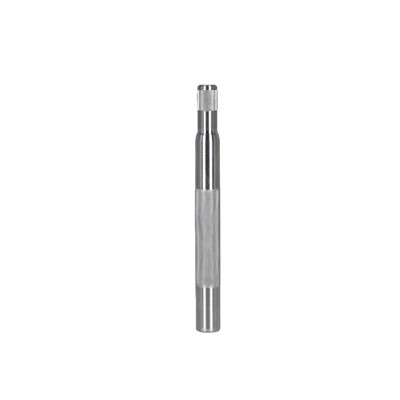


As a seasoned pump shaft supplier, I've witnessed firsthand the crucial role that stress distribution plays in the performance and longevity of pump shafts. Understanding the stress distribution on a pump shaft is not just a technical curiosity; it's a fundamental aspect of ensuring the reliability and efficiency of pumps in various industrial applications. In this blog, we'll delve into the intricacies of stress distribution on a pump shaft, exploring the factors that influence it and the implications for pump design and operation.
The Basics of Stress Distribution
Stress, in the context of a pump shaft, refers to the internal forces that develop within the shaft as it is subjected to various loads during operation. These loads can include torque, bending, and axial forces, which are generated by the pump's motor, the fluid being pumped, and the mechanical components of the pump itself. The distribution of these stresses along the length and cross-section of the shaft is what we refer to as stress distribution.


The stress distribution on a pump shaft is not uniform. It varies depending on the location within the shaft and the nature of the loads acting on it. For example, the stress is typically highest at points where the shaft is subjected to the greatest forces, such as at the coupling where the shaft connects to the motor or at the impeller where the fluid forces are applied. Understanding these stress concentrations is essential for designing a pump shaft that can withstand the operating conditions without failure.
Factors Influencing Stress Distribution
Several factors influence the stress distribution on a pump shaft. These include the design of the shaft, the materials used, the operating conditions, and the type of pump. Let's take a closer look at each of these factors.
Shaft Design
The design of the pump shaft, including its diameter, length, and shape, has a significant impact on stress distribution. A shaft with a larger diameter will generally have a lower stress level for a given load compared to a shaft with a smaller diameter. This is because the larger cross-sectional area provides more material to resist the applied forces. Similarly, the length of the shaft can affect stress distribution, as longer shafts are more prone to bending and torsional stresses.
The shape of the shaft also plays a role. For example, a stepped shaft, which has different diameters along its length, can help to reduce stress concentrations at critical points. By gradually changing the diameter, the stress can be more evenly distributed along the shaft.
Materials
The choice of materials for the pump shaft is another important factor. Different materials have different mechanical properties, such as strength, stiffness, and ductility, which can affect how the shaft responds to stress. For example, a high-strength steel shaft will be able to withstand higher stresses than a shaft made of a lower-strength material. However, high-strength materials may also be more brittle, which can increase the risk of cracking under certain conditions.
In addition to the material's inherent properties, the manufacturing process can also affect the stress distribution. For example, heat treatment can be used to improve the strength and hardness of the shaft, but it can also introduce residual stresses that can affect the overall stress distribution.
Operating Conditions
The operating conditions of the pump, such as the speed, load, and temperature, can also have a significant impact on stress distribution. Higher speeds and loads will generally result in higher stresses on the shaft. Similarly, operating at high temperatures can reduce the strength of the shaft material, increasing the risk of failure.
The type of fluid being pumped can also affect stress distribution. For example, pumping a corrosive fluid can cause the shaft to corrode, which can weaken the material and increase the stress levels. In addition, the viscosity of the fluid can affect the forces acting on the shaft, as more viscous fluids require more energy to pump.
Type of Pump
Different types of pumps have different operating characteristics, which can affect the stress distribution on the shaft. For example, a centrifugal pump typically generates a radial force on the shaft due to the rotation of the impeller, while a positive displacement pump may generate an axial force. Understanding the specific loads and forces associated with each type of pump is essential for designing a shaft that can withstand the operating conditions.
Implications for Pump Design and Operation
Understanding the stress distribution on a pump shaft is crucial for pump design and operation. By accurately predicting the stress levels and distribution, engineers can design a shaft that is strong enough to withstand the operating conditions without being over-designed, which can increase the cost and weight of the pump.
In addition, understanding stress distribution can help to identify potential failure points in the shaft. By analyzing the stress concentrations, engineers can take steps to reduce these stresses, such as by changing the shaft design or using a different material. This can help to improve the reliability and longevity of the pump.
For pump operators, understanding stress distribution can also be useful for monitoring the condition of the shaft. By measuring the stress levels during operation, operators can detect any abnormal stress patterns that may indicate a problem with the pump. This can allow for early intervention and preventive maintenance, reducing the risk of costly breakdowns.
Examples of Pump Shaft Applications
To illustrate the importance of stress distribution in pump shafts, let's look at a few examples of different types of pumps and how stress distribution affects their design and operation.
Spline Hydraulic Pump
A spline hydraulic pump is a type of positive displacement pump that uses a splined shaft to transmit torque from the motor to the pump. The splines on the shaft provide a positive connection between the motor and the pump, ensuring efficient power transmission. However, the splines also introduce stress concentrations at the root of the splines, which can be a potential failure point.
To minimize the stress concentrations, the splines are typically designed with a specific shape and profile. In addition, the material used for the shaft is carefully selected to ensure that it has the necessary strength and toughness to withstand the stresses. By understanding the stress distribution on the splined shaft, engineers can design a pump that is reliable and efficient.
Shaft Oil Pump
A shaft oil pump is used to circulate oil in an engine or other mechanical system. The pump shaft is subjected to a combination of torsional and bending stresses as it rotates to drive the pump. The stress distribution on the shaft is influenced by the design of the pump, the speed of rotation, and the viscosity of the oil.
To ensure the reliability of the shaft, it is important to design it to withstand the maximum expected stresses. This may involve using a larger diameter shaft or a higher-strength material. In addition, the shaft may be heat-treated or surface-treated to improve its mechanical properties.
Bare Shaft Centrifugal Pump
A bare shaft centrifugal pump is a type of pump that uses a rotating impeller to create a centrifugal force that moves the fluid. The pump shaft is subjected to radial and axial forces due to the rotation of the impeller and the pressure of the fluid. The stress distribution on the shaft is influenced by the design of the impeller, the flow rate of the fluid, and the operating conditions.
To optimize the stress distribution on the shaft, the impeller is typically designed to minimize the radial and axial forces. In addition, the shaft may be supported by bearings to reduce the bending stresses. By understanding the stress distribution on the shaft, engineers can design a pump that is efficient and reliable.
Contact for Procurement and Consultation
If you're in the market for high-quality pump shafts or need expert advice on stress distribution and pump design, we're here to help. As a leading pump shaft supplier, we have the expertise and experience to provide you with the best solutions for your specific needs. Whether you're looking for a standard pump shaft or a custom-designed solution, we can offer you a wide range of options to choose from.
Don't hesitate to reach out to us to discuss your requirements and explore how we can assist you in your pump shaft procurement. Our team of professionals is ready to provide you with detailed information, answer your questions, and guide you through the procurement process.
References
- Budynas, R. G., & Nisbett, J. K. (2011). Shigley's Mechanical Engineering Design. McGraw-Hill.
- Juvinall, R. C., & Marshek, K. M. (2006). Fundamentals of Machine Component Design. Wiley.
- Shigley, J. E., Mischke, C. R., & Budynas, R. G. (2004). Mechanical Engineering Design. McGraw-Hill.