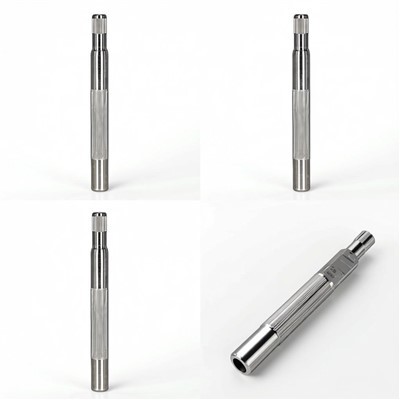


Hey there! As a motor shaft supplier, I've seen firsthand the challenges that come with operating motors in high - temperature environments. Today, I want to chat about what modifications are needed for a motor shaft when it's working in these tough conditions.
First off, let's understand why high - temperature environments are such a big deal. When a motor operates in high heat, it can cause a whole bunch of problems for the motor shaft. For starters, thermal expansion is a major issue. Metals expand when they get hot, and if the motor shaft isn't designed to handle this expansion, it can lead to misalignment, increased wear and tear, and even mechanical failure.
One of the key modifications we often make is to use materials with a lower coefficient of thermal expansion. For example, some special alloys can be used instead of standard steel. These alloys expand less when heated, which helps to maintain the proper dimensions of the motor shaft. This is crucial because any deviation in the shaft's size can affect the motor's performance and efficiency.
Another important modification is related to lubrication. In high - temperature environments, regular lubricants can break down quickly. So, we recommend using high - temperature lubricants that can withstand the heat without losing their lubricating properties. These lubricants form a protective film on the motor shaft, reducing friction and wear. This not only extends the life of the shaft but also helps the motor run more smoothly.
Surface treatments are also a must - have for motor shafts in high - temperature settings. We can apply coatings that are resistant to heat and corrosion. These coatings act as a barrier between the shaft and the harsh environment, preventing oxidation and other forms of damage. For instance, ceramic coatings are known for their excellent heat resistance and can significantly improve the durability of the motor shaft.
Now, let's talk about some specific types of motors and how their shafts might need modifications. If you're dealing with a Parallel Shaft Ac Gearmotor, the shaft needs to be able to handle the additional stress from the gearing system. In high - temperature environments, the gears can expand and put extra pressure on the shaft. So, we might need to increase the shaft's diameter or use a stronger material to ensure it can handle the load.
For a Vertical Shaft Motor, the shaft has to deal with the force of gravity in addition to the high - temperature effects. This means that the shaft needs to be properly supported and balanced. We can add additional bearings or use a more rigid design to prevent the shaft from bending or vibrating under the combined forces of heat and gravity.
If you're looking for a Spare Motor Shaft, it's important to make sure it's designed to fit your specific motor and can handle the high - temperature conditions. We can customize the shaft based on your motor's requirements, including the material, dimensions, and surface treatments.
In addition to these physical modifications, we also need to consider the cooling system of the motor. A good cooling system can help keep the temperature of the motor shaft under control. This might involve adding fans, heat sinks, or using liquid cooling methods. By reducing the temperature of the shaft, we can minimize the effects of thermal expansion and improve the overall performance of the motor.
We also need to pay attention to the electrical properties of the motor shaft in high - temperature environments. High heat can affect the electrical conductivity of the shaft, which can lead to issues such as overheating and electrical shorts. To prevent this, we can use materials with better electrical insulation properties or apply insulating coatings to the shaft.
Another aspect to consider is the dynamic balance of the motor shaft. In high - temperature environments, the shaft can become unbalanced due to thermal expansion or uneven wear. An unbalanced shaft can cause vibrations, which can damage the motor and other components. We can use balancing techniques to ensure that the shaft rotates smoothly and evenly, even in high - temperature conditions.
When it comes to maintenance, it's important to have a regular inspection schedule for motors operating in high - temperature environments. This includes checking the shaft for signs of wear, misalignment, and damage. We can also monitor the temperature of the shaft and the motor to ensure that they are operating within the safe range.
As a motor shaft supplier, we have the expertise and resources to provide you with the best solutions for your high - temperature motor shaft needs. Whether you need a custom - made shaft or just some advice on how to modify your existing shaft, we're here to help.
If you're in the market for motor shafts that can handle high - temperature environments, don't hesitate to reach out to us. We can discuss your specific requirements and provide you with a quote. Our team of experts is always ready to assist you in finding the right solution for your motor.
In conclusion, modifying a motor shaft for high - temperature environments is a complex process that requires careful consideration of various factors. By using the right materials, lubricants, surface treatments, and cooling systems, we can ensure that the motor shaft performs well and lasts a long time. So, if you're facing challenges with your motor in high - temperature conditions, give us a call and let's work together to find the best solution.
References:


- Various industry research on motor shaft materials and performance in high - temperature environments.
- Manufacturer's guidelines for motors operating in high - temperature settings.