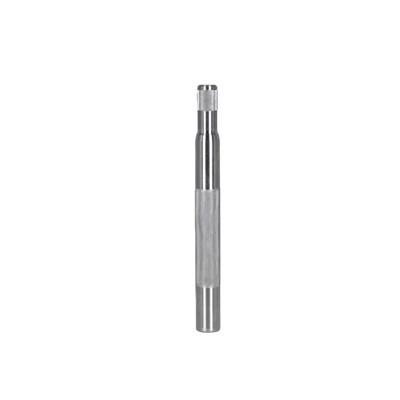


As a valve shaft supplier, ensuring the quality of our products is of utmost importance. A high - quality valve shaft is crucial for the proper functioning of various types of valves, such as ball valves, gate valves, and cut - off valves. In this blog, I will share some effective methods to test the quality of a valve shaft.
1. Visual Inspection
Visual inspection is the first step in evaluating the quality of a valve shaft. Start by examining the surface finish of the shaft. A smooth and uniform surface indicates a well - machined product. Look for any visible defects such as scratches, cracks, or pits. Scratches can reduce the shaft's resistance to corrosion and may lead to premature failure. Cracks are even more serious as they can propagate under stress, causing the shaft to break.
Inspect the dimensions of the valve shaft. Use precision measuring tools like calipers and micrometers to ensure that the shaft meets the specified diameter, length, and other critical dimensions. Any deviation from the design specifications can affect the valve's performance. For example, if the diameter is too large, the shaft may not fit properly into the valve body, while a diameter that is too small can result in a loose fit and leakage.


2. Material Analysis
The material of the valve shaft plays a significant role in its quality and performance. Different types of valves require different materials based on the operating conditions, such as temperature, pressure, and the nature of the fluid being controlled.
One common method of material analysis is spectroscopy. This technique can determine the chemical composition of the shaft material. By analyzing the elements present in the material, we can ensure that it meets the required standards. For example, in a stainless - steel valve shaft, the correct percentage of chromium, nickel, and other alloying elements is essential for corrosion resistance.
Another way is to perform hardness testing. Hardness is an important property of the valve shaft material. A shaft that is too soft may wear out quickly, while a shaft that is too hard may be brittle and prone to cracking. There are several hardness testing methods, such as the Rockwell hardness test and the Brinell hardness test. These tests can provide valuable information about the material's hardness and its suitability for the intended application.
3. Mechanical Testing
Mechanical testing is crucial to evaluate the strength and durability of the valve shaft. One of the most common mechanical tests is the tensile test. In a tensile test, a sample of the valve shaft is subjected to a gradually increasing tensile force until it breaks. The test measures the ultimate tensile strength, yield strength, and elongation of the material. These parameters provide insights into the shaft's ability to withstand pulling forces without failure.
Another important mechanical test is the torque test. Valves often operate under a certain amount of torque, and the valve shaft must be able to transmit this torque effectively. During a torque test, a specific amount of torque is applied to the shaft, and its ability to rotate smoothly without excessive deformation or failure is evaluated. This test helps ensure that the valve shaft can perform its function in real - world applications.
4. Corrosion Resistance Testing
Valve shafts are often exposed to corrosive environments, especially in industries such as chemical processing, oil and gas, and water treatment. Therefore, testing the corrosion resistance of the valve shaft is essential.
One way to test corrosion resistance is through salt spray testing. In this test, the valve shaft is placed in a chamber where it is exposed to a salt - water mist for a specified period. After the test, the shaft is examined for signs of corrosion, such as rust or pitting. The results of the salt spray test can provide an indication of the shaft's ability to withstand corrosion in a marine or other corrosive environments.
Another method is immersion testing. The valve shaft is immersed in a specific corrosive solution for a certain time. This test can simulate the actual conditions that the shaft may encounter in its application. By measuring the weight loss or the change in the surface appearance of the shaft after immersion, we can evaluate its corrosion resistance.
5. Surface Coating Inspection
Many valve shafts are coated to enhance their performance and corrosion resistance. Inspecting the surface coating is an important part of quality testing.
First, check the thickness of the coating. A coating that is too thin may not provide adequate protection, while a coating that is too thick can affect the fit and function of the valve shaft. Use a coating thickness gauge to measure the thickness of the coating at various points on the shaft.
Also, examine the adhesion of the coating. A well - adhered coating is essential for long - term performance. One way to test adhesion is by using a cross - hatch test. In this test, a series of cuts are made in the coating, and a piece of adhesive tape is applied and then removed. If the coating does not peel off, it indicates good adhesion.
6. Performance Testing in a Valve Assembly
Finally, it is important to test the valve shaft in a complete valve assembly. This test can simulate the actual operating conditions of the valve.
Install the valve shaft in a valve body and test the valve's opening and closing functions. Check for smooth operation, proper sealing, and the ability to control the flow of fluid accurately. Any issues with the valve shaft, such as binding or leakage, can be detected during this test.
In addition, test the valve under different pressure and temperature conditions. This can help ensure that the valve shaft can perform reliably in a wide range of operating environments.
Conclusion
Testing the quality of a valve shaft is a comprehensive process that involves multiple steps. By performing visual inspection, material analysis, mechanical testing, corrosion resistance testing, surface coating inspection, and performance testing in a valve assembly, we can ensure that our valve shafts meet the highest quality standards.
If you are in the market for high - quality valve shafts, we are here to serve you. We offer a wide range of valve shafts, including Ball Valve Shaft, Gate Valve Shaft, and Cut Off Valve Shaft. Our products are rigorously tested to ensure their performance and durability. Contact us for more information and to start a procurement discussion.
References
- ASTM International standards for valve shaft testing
- ASME standards related to valve design and performance
- Technical literature on valve materials and manufacturing processes