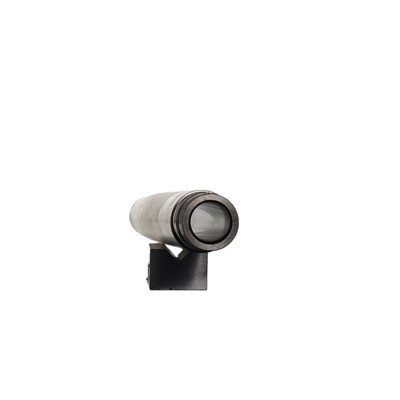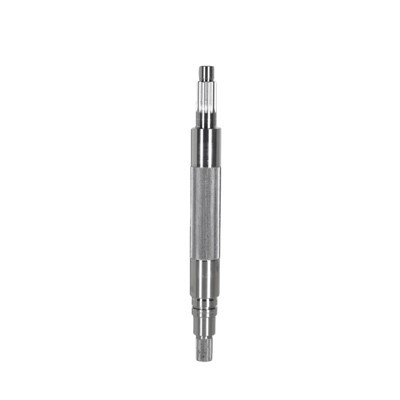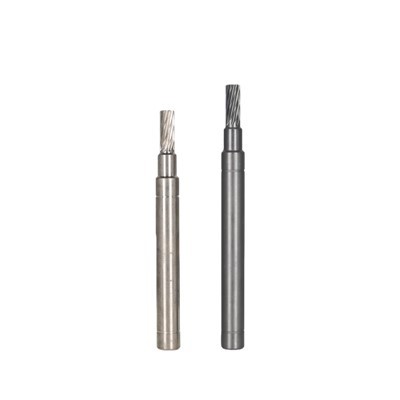

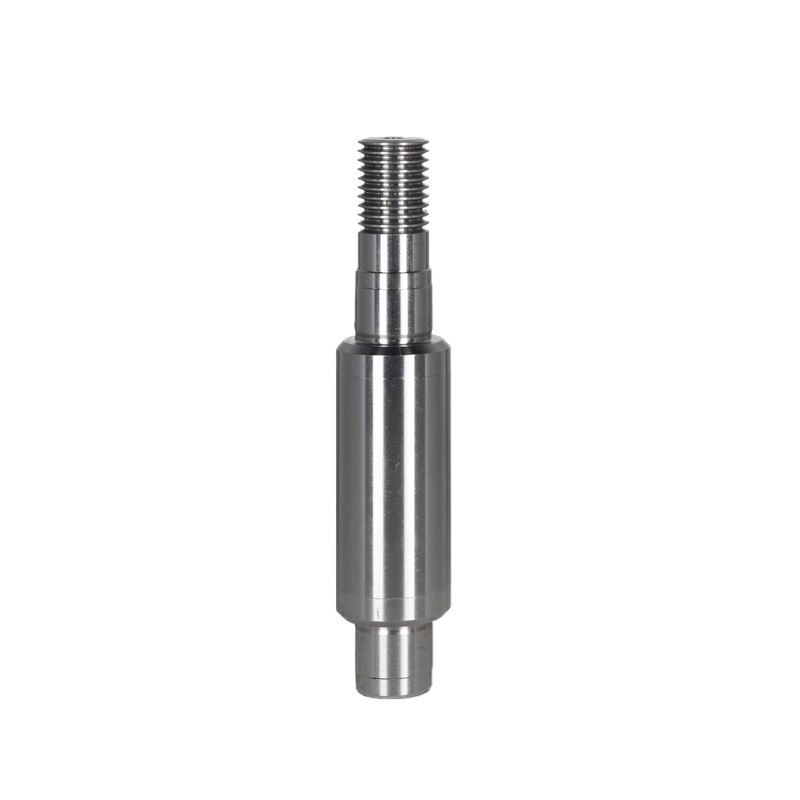


Ningbo Uni-drive Technology Co., Ltd. is one of the leading manufacturers and suppliers of solar motor shaft in China, featured by quality products and good price. If you're going to buy fancy solar motor shaft made in China, welcome to get pricelist from our factory. Customized orders are welcome.
Introduction
Solar powered motors live a different life than their grid fed counterparts. A solar motor has no steady voltage, no constant load, and no fixed running time. It starts when the sun comes up, speeds up as sunlight gets stronger, runs in the midday heat, then slows down and stops as light fades, and repeats this cycle every day. This daily cycle, repeated thousands of times over the motor's life, creates stresses that traditional shaft designs are not made to handle.The Solar Motor Shaft was developed specifically for this operating pattern. It does not assume stable power input or continuous duty. Instead, it is built around the reality of photovoltaic systems: variable speed, frequent start stop cycles, and the thermal swings that accompany outdoor installation. Where a standard shaft might treat these conditions as exceptions, this one treats them as the baseline.
Features
| Excellent Outdoor Environmental Adaptability | Adopts special surface treatment technology (anti-ultraviolet, anti-oxidation, anti-condensation), enabling it to stably operate in extreme outdoor environments such as high temperature, low temperature, strong ultraviolet radiation, and high humidity, perfectly adapting to the long-term outdoor working scenario of solar-powered equipment. |
| High-Efficiency & Low-Loss Transmission | Adopts ultra-precision grinding and dynamic balancing technology, with strict control over coaxiality and surface smoothness, minimizing power loss during transmission, improving the energy utilization rate of solar systems, and matching the low-power, continuous stable output characteristics of solar motors. |
| Corrosion & Aging Resistance | Selects high-quality corrosion-resistant materials (such as stainless steel, high-strength anti-corrosion alloy steel), effectively resisting corrosion from rainwater, dew, and outdoor harmful gases, avoiding component aging and damage, and extending the service life of the entire solar motor system. |
| Precise Matching with Solar Motors | Optimized structural design, compatible with various types of solar motors (such as permanent magnet synchronous solar motors, asynchronous solar motors), adapting to the voltage fluctuation characteristics of solar power supply, ensuring stable power transmission even under unstable light conditions. |
Benefits
Think about what happens during those thousands of start cycles. Every morning, the shaft experiences a torque spike as the motor overcomes inertia with whatever current the panels can supply at dawn. Standard shafting, designed for constant speed operation, accumulates fatigue during these daily events. The Solar Motor Shaft uses material and geometry selected to handle precisely this pattern-frequent starts, not continuous running, as the dominant stress factor. Consider also the thermal environment. A motor mounted on a tracking array or a pump station sits exposed. Morning cool gives way to afternoon heat, then cool again by night. A shaft that expands and contracts at a different rate than its bearings or rotor hub will eventually develop clearance issues or binding. Matching thermal behavior across the assembly eliminates that failure path. Then there is the question of corrosion. Outdoor solar installations face humidity, dust, and in some environments, salt air. Surface treatments and material choices that work indoors often prove inadequate here. Field returns tell the story: shafts pulled from solar applications show wear patterns distinct from those in industrial settings-more corrosion related pitting, more fretting at interface points, more evidence of the cumulative effect of daily thermal cycling. Addressing these factors at the design stage prevents them from becoming field failures.
Conclusion
Solar power changes how motors are used. The Solar Motor Shaft changes how they are built-not through radical innovation, but through a straightforward acknowledgment that a component exposed to daily start stop cycles, outdoor temperatures, and variable power deserves different engineering priorities than one living indoors under steady load. For systems where reliability directly affects energy harvest and operating costs, that distinction is not academic. It is the difference between a motor that runs for the life of the array and one that becomes a maintenance item before its time.
Hot Tags: solar motor shaft, China solar motor shaft manufacturers, suppliers, factory