


Material selection is the core foundation that determines the service performance and service life of mechanical shafts. Different working conditions including load size, rotation speed, ambient temperature and corrosion environment require engineers to select appropriate steel grades and matching processing techniques.
Common shaft‑making materials cover carbon structural steel, alloy structural steel and forging steel. 45# steel (SM45C) is the most widely used medium‑carbon steel for general‑purpose shafts. It features good comprehensive mechanical properties after quenching and tempering, suitable for ordinary stepped shafts, straight shafts with medium load and medium rotation speed. For high‑load, impact‑resistant working scenarios, 42CrMo forged steel stands out. Thanks to molybdenum and chromium alloy elements, it delivers high tensile strength, excellent toughness and anti‑fatigue performance, which is widely adopted for transmission shafts, gear shafts and heavy‑load spline shafts in engineering machinery and commercial vehicles.
SCM415 and SCM420 are typical carburizing alloy steels. After carburizing heat treatment, the shaft surface obtains high hardness and wear resistance while the inner core remains tough to resist impact shock. These materials are the preferred choice for automotive gear shafts and precision spline shafts. Q235 / A3 steel is mainly applied for low‑load, non‑key‑stress simple shafts with low performance requirements.
Besides material choosing, heat treatment directly decides the final quality of shafts. Quenching and tempering is the mainstream process for most transmission shafts, achieving balanced hardness and toughness. Carburizing treatment is used for parts requiring surface wear‑resistance. Surface nitriding can form a dense nitride layer, improving corrosion resistance and surface hardness without large deformation.
Precision machining steps include forging blanking, rough turning, fine turning, grinding, keyway / spline processing, straightening and surface treatment. For high‑precision shafts, multi‑step straightening is essential to eliminate bending deformation caused by forging and heat treatment. Common surface treatments contain blackening, zinc plating, hard chrome plating, which improve rust‑proof capacity and surface wear‑resistance respectively.
Manufacturers must match materials, heat treatment and processing technology according to customers' actual working conditions. Blindly pursuing high‑grade materials will raise procurement costs, while low‑grade material misuse will cause early fracture and fatigue failure of shafts. Reasonable material‑process matching is the key to balance cost, service life and stability.
Key Material & Process Selection for Mechanical Shafts
Popular Products
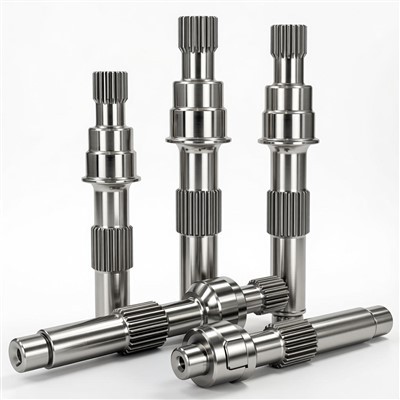
Automotive Motor Shaft
The Automotive Motor Shaft is a core transmission component of automotive motors, serving as the key link to transfer
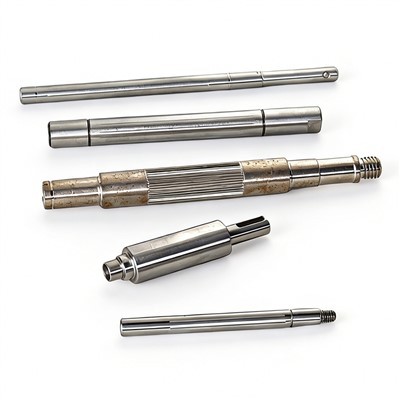
Wiper Motor Shaft
Nobody thinks about a wiper motor shaft until it stops working. Usually, that happens in the middle of a downpour.
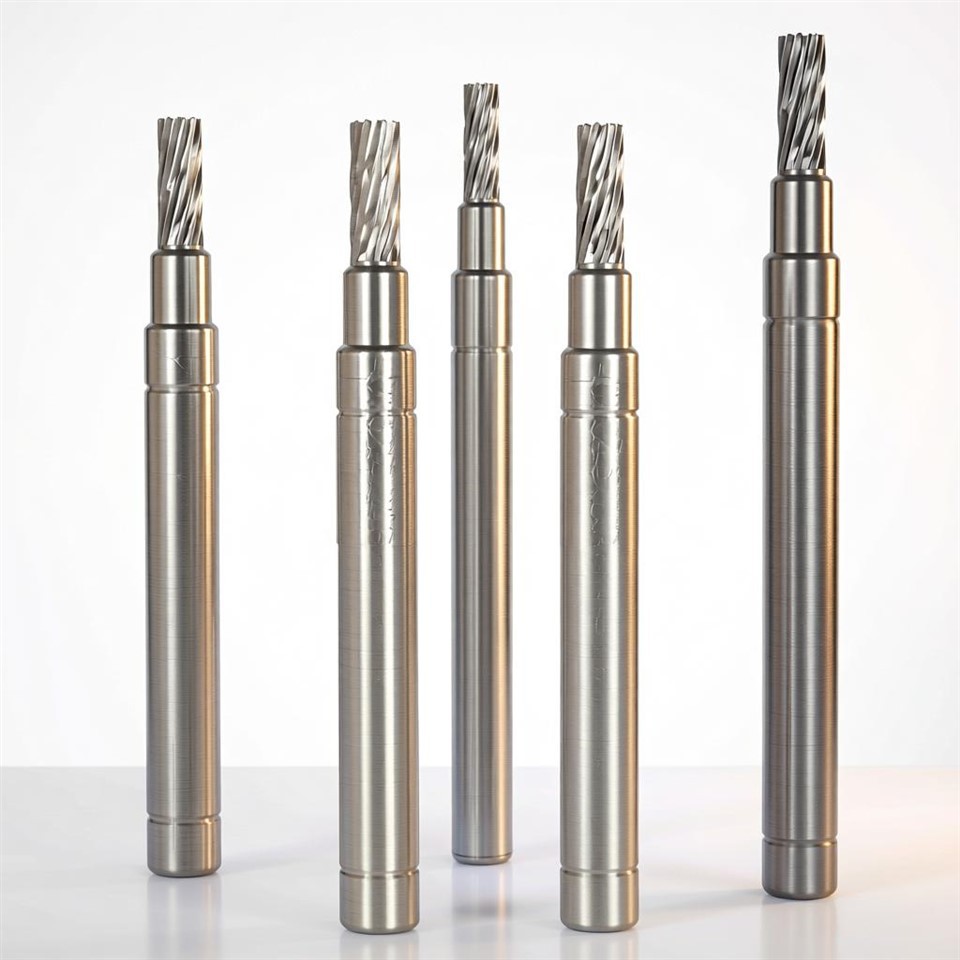
Tapered Shaft Motor
The Tapered Shaft Motor features a conical shaft design for tight coupling with pulleys and gears, optimized for power

Marine Shaft Generator
Every kilowatt is very important on the ship, the main engine turns the propeller shaft, and this shaft runs nonstop
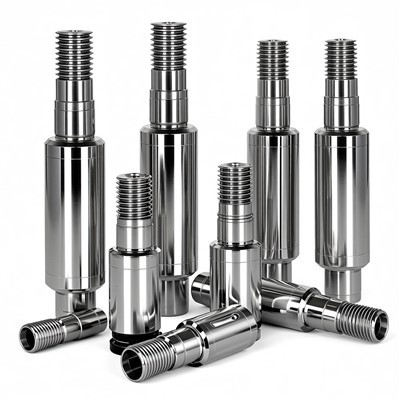
Spline Hydraulic Pump
The Spline Hydraulic Pump uses a splined shaft connection to create a firm link between the pump and its drive source.
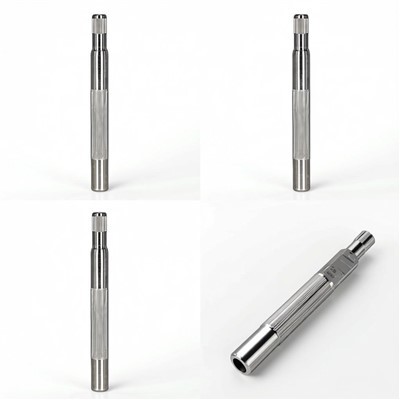
Fuel Pump Shaft
Precision engineered for high performance fuel systems, the Fuel Pump Shaft serves as the critical link between